
Introduction
Table of Contents
There is a YouTube channel with 1,000 subscribers that gets approved in a week. There is also one with 10,000 subscribers that gets rejected three times. However, the difference is rarely about numbers.
The problem is, most creators focus only on subscriber count and watch hours. Meanwhile, YouTube’s review team looks at originality, consistency, and policy compliance first.
For that reason, here is a complete guide on how to monetize YouTube this year. I have ranked the steps from the most important to the most overlooked. In addition, each section includes common mistakes so you can avoid them before applying.
1. Meet the Basic Requirements First
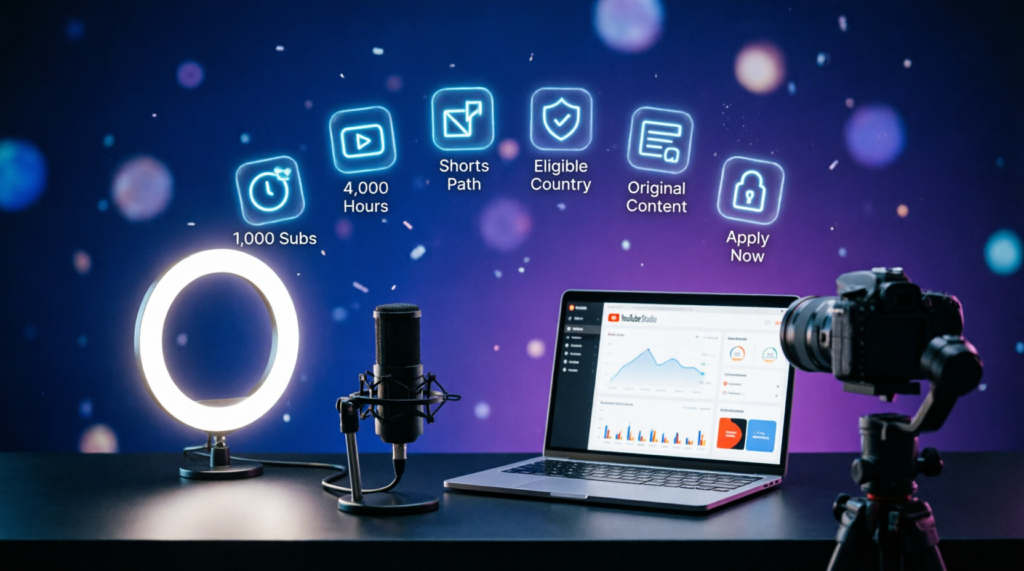
First of all, you need to meet the minimum thresholds. The standard program requires 1,000 subscribers. You also need 4,000 valid public watch hours in the past 12 months. That means your watch time must come from public videos. Private and unlisted videos do not count.
Key Requirements: 1,000 subscribers, 4,000 public watch hours in 12 months, 2-step verification enabled, AdSense account linked, and no active Community Guidelines strikes.
Pros: Clear and measurable goals, tracked directly in YouTube Studio, and no application fee.
Cons: Watch hours reset if you do not maintain activity, subscriber count can drop, and approval is not guaranteed even after meeting thresholds.
Link and Check Requirements: youtube.com/creators
2. Understand the Shorts Path
Meanwhile, YouTube Shorts has a separate path. You need 1,000 subscribers. You also need 10 million valid public Shorts views within 90 days. This is harder than it sounds. Shorts views count differently from long-form watch time.
Key Requirements: 1,000 subscribers, 10 million Shorts views in 90 days, original content, and compliance with monetization policies.
Pros: Faster growth potential, lower barrier for viral content, and revenue sharing from the Shorts feed.
Cons: 10 million views is a high bar, revenue per view is lower than long-form, and viral spikes rarely sustain.
Link and Check Requirements: youtube.com/shorts
3. Check the Lower Tier for Smaller Creators
On the other hand, YouTube now offers a lower tier. At 500 subscribers, you can access fan funding features. These include Super Thanks, Super Chat, and channel memberships. That means you can start earning before hitting the full threshold.
Key Requirements: 500 subscribers, 3 valid public uploads in the last 90 days, 3,000 watch hours in 12 months or 3 million Shorts views in 90 days.
Pros: Lower barrier to entry, access to fan funding, and early monetization experience.
Cons: No ad revenue yet, limited features, and still requires consistent uploads.
Link and Check Requirements: youtube.com/creators
4. Confirm Your Country Is Eligible
Interestingly, monetization is not available everywhere. YouTube maintains a list of eligible countries. If your country is not on the list, you cannot apply yet. This applies even if you meet the thresholds.
Key Requirements: Residence in an eligible country, valid payment method, and tax information submitted.
Pros: Once eligible, the process is straightforward and fully digital.
Cons: Country list changes slowly, some regions wait years, and VPN workarounds violate policy.
Link and Check Requirements: youtube.com/creators
5. Avoid Reused Content
In contrast, reused content is the top rejection reason. This includes compilations and reaction videos without commentary. It also includes content taken from other channels. YouTube wants original content. Repackaged material rarely passes review.
Key Requirements: Original commentary, transformative edits, and clear added value.
Pros: Original content builds long-term channel authority and audience trust.
Cons: Takes more effort, requires scripting and editing skills, and slower growth at the start.
Link and Check Requirements: youtube.com/creators
6. Build a Consistent Upload Schedule
What is more, consistency matters more than frequency. YouTube’s algorithm rewards channels that upload predictably. A weekly schedule beats irregular daily uploads. This is one of the most overlooked factors.
Key Requirements: Predictable schedule, consistent content quality, and audience retention above 50 percent.
Pros: Algorithm favors consistency, audience knows when to expect content, and retention improves over time.
Cons: Requires discipline, one missed week can slow momentum, and quality must stay high.
Link and Check Requirements: youtube.com/creators
7. Optimize Titles and Thumbnails
Still, titles and thumbnails decide whether anyone clicks. A great video with a weak thumbnail gets ignored. YouTube’s own data shows this clearly. Click-through rate is one of the strongest signals for promotion. It matters more than upload frequency.
Key Requirements: Clear titles, custom thumbnails, readable text, and emotional triggers without clickbait.
Pros: Higher click-through rate, better algorithm promotion, and more watch time.
Cons: Requires design skills, testing takes time, and clickbait can hurt long-term trust.
Link and Check Requirements: youtube.com/creators
8. Track Watch Time, Not Just Views
Additionally, watch time matters more than raw views. A video with 10,000 views and 70 percent retention beats one with 50,000 views and 20 percent. YouTube promotes videos that keep people watching. So focus on retention, not vanity metrics.
Key Requirements: Average view duration above 50 percent, retention graphs reviewed weekly, and audience feedback monitored.
Pros: Better algorithm performance, stronger subscriber conversion, and more ad revenue per view.
Cons: Requires constant content improvement, harder to fake, and slower to see results.
Link and Check Requirements: youtube.com/creators
9. Apply Through YouTube Studio
Furthermore, the application happens inside YouTube Studio. Go to the Monetization tab. Review the requirements and click Apply. YouTube reviews applications within a few weeks. Sometimes it is faster. Sometimes it takes longer.
Key Requirements: Monetization tab unlocked, all requirements met, and AdSense account linked.
Pros: Simple process, no paperwork, and clear status updates.
Cons: Review times vary, rejection reasons are sometimes vague, and reapplication requires a 30-day wait.
Link and Check Requirements: studio.youtube.com
10. Avoid Common Policy Mistakes
Finally, most rejections happen because of policy violations. Reused content, misleading metadata, and fake engagement are the top three. Avoiding them is simpler than fixing them later. Once you are flagged, recovery takes time.
Key Requirements: Original content, honest metadata, no purchased subscribers or views, and clean Community Guidelines record.
Pros: Once approved, monetization is stable and long-term.
Cons: Some mistakes are permanent, appeals take time, and repeated violations can end monetization forever.
Link and Check Requirements: youtube.com/creators
Conclusion
Monetizing YouTube this year is less about hitting numbers. It is more about building a real channel. The 1,000 subscriber and 4,000 watch hour thresholds matter. However, they are not the whole story. Meanwhile, Shorts creators face a separate path with its own rules. In addition, the lower tier at 500 subscribers gives smaller creators an early start. However, reused content and policy violations remain the biggest rejection reasons.
Each step has its own requirements and pitfalls. No single trick guarantees approval. What matters most is creating original content, uploading consistently, and applying only when you truly meet the requirements.
Which step are you on right now? Let me know in the comments.
Read also: 10 Best AI Tools for Creators and Productivity This Year
